

CDC Return to Work COVID Guidelines (Updated)

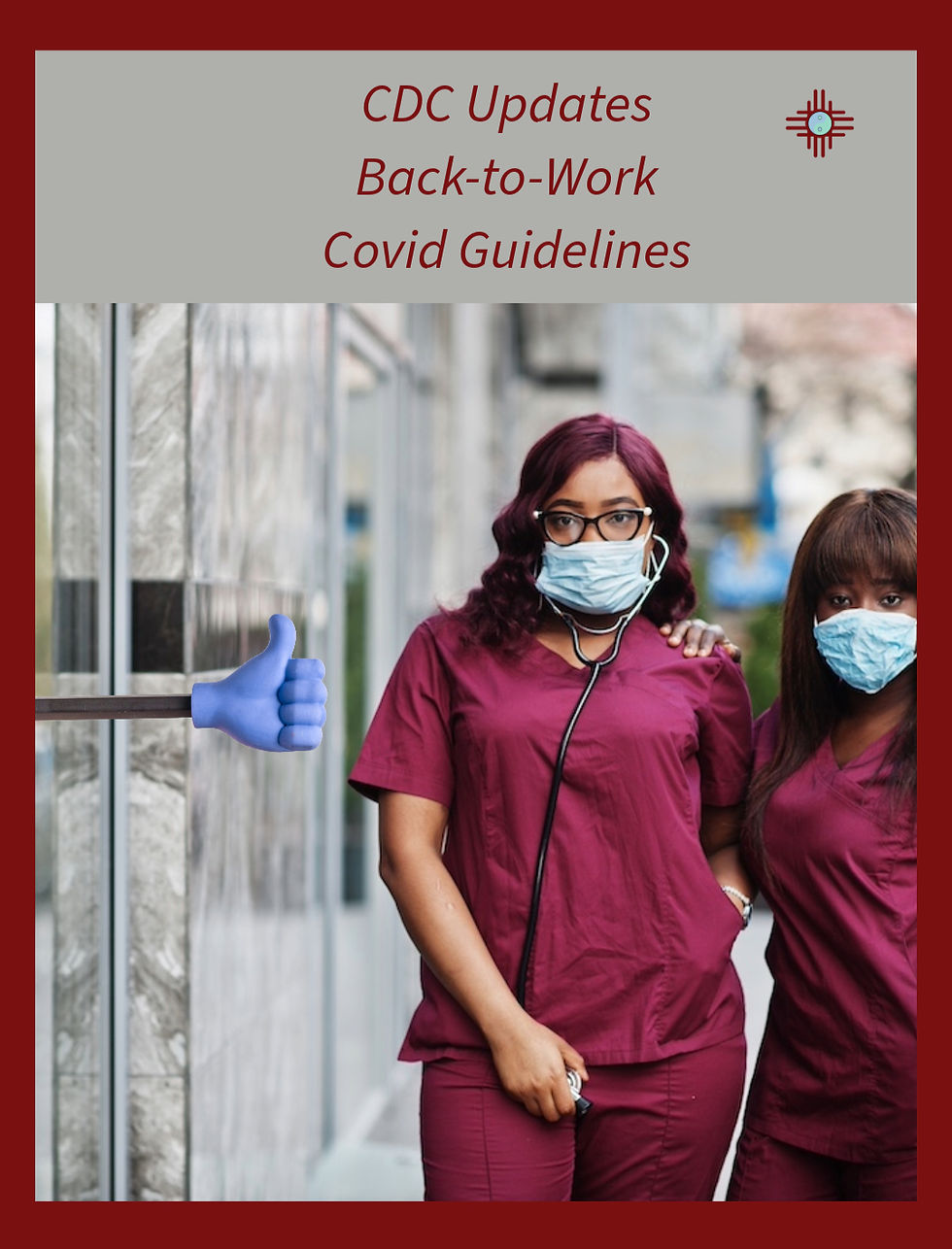
The CDC’s updated Viral Respiratory Infections guidance standardizes work restrictions and source control for common respiratory viruses, including COVID-19, influenza, and RSV. For long-term care providers, the main change is a shorter minimum exclusion period for personnel with COVID-19, without testing as a return-to-work requirement.
Return-to-Work Criteria
· Remain out of work until at least three days have passed since symptom onset—or since the first positive test if always asymptomatic—symptoms are improving, the person feels well enough to work, and they have been fever-free for 24 hours without fever-reducing medication.
· Symptom onset or the positive test date is day zero; day four is the earliest return date.
· After returning, wear source control around residents, coworkers, and visitors through at least the end of day seven. Day eight is the earliest day to work without it.
After Exposure
Asymptomatic personnel with a known or suspected exposure generally may continue working. They should wear source control and monitor for symptoms through at least day five after the last exposure. If symptoms develop, they should stop working and follow the return-to-work criteria. Routine serial testing on days one, three, and five is no longer recommended.
Exceptions and Scope
The day-four return should not be automatic for personnel who were severely or critically ill or are moderately to severely immunocompromised. Their return should be determined case by case, potentially with expert consultation and pathogen-specific testing. The guidance covers respiratory viruses such as SARS-CoV-2, influenza, RSV, parainfluenza, rhinovirus, human metapneumovirus, and adenoviruses. It does not replace separate CDC guidance for measles, mumps, rubella, varicella, cytomegalovirus, parvovirus B19, viral conjunctivitis, or new and emerging pathogens.


Comments